

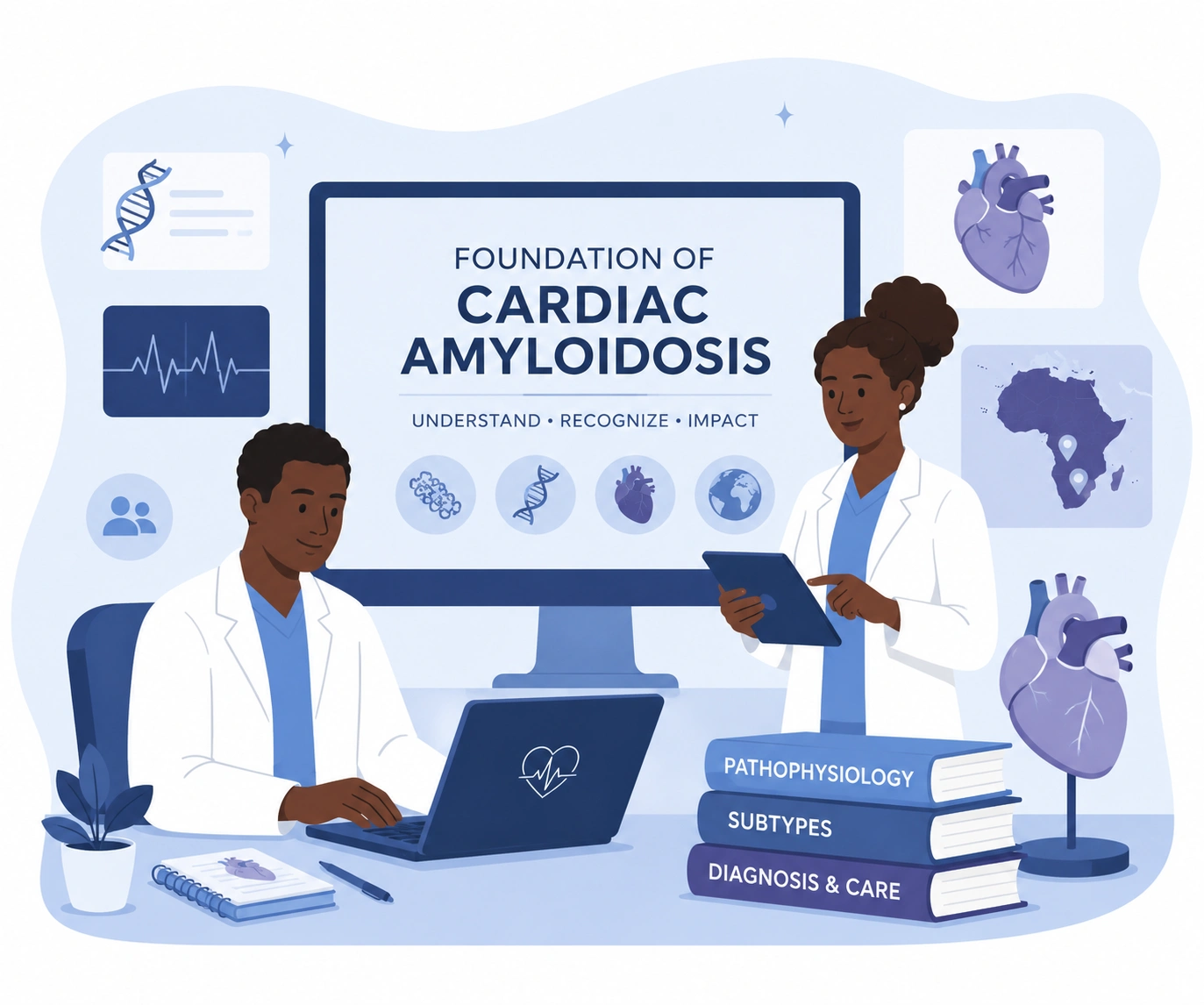
Foundations of Amyloidosis
Foundations of Amyloidosis
What Will I Learn?
- Explain the normal structure and function of proteins and how amyloid fibrils form.
- Describe the pathophysiology of systemic amyloidosis and its effects on different organs, particularly the heart.
- Differentiate the major amyloidosis subtypes, including AL, ATTR, and AA amyloidosis.
- Distinguish hereditary transthyretin amyloidosis (hATTR) from wild-type transthyretin amyloidosis (wtATTR).
- Understand the genetic basis, inheritance patterns, and geographic distribution of hATTR, with emphasis on African populations.
- Recognize why cardiac amyloidosis is frequently underdiagnosed and often mistaken for more common cardiovascular diseases.
- Identify the major barriers to timely diagnosis, treatment access, and specialist care in low- and middle-income countries.
- Appreciate the impact of healthcare systems, policy, and socioeconomic factors on patient outcomes.
- Explore emerging advances in diagnostics, therapies, digital health, and international collaborations that aim to improve equity in amyloidosis care.
- Build a strong scientific foundation for the subsequent modules on clinical presentation, diagnosis, imaging, and treatment.
Course Content
Module 1: Foundations of Transthyretin Amyloidosis
Pre-test: Foundations of Transthyretin Amyloidosis
Introduction
Lesson 1: Introduction to Amyloidosis
13:11Lesson 2: Hereditary ATTR Amyloidosis
00:00Lesson 3: Barriers and Future Directions in ATTR-CM Care
Assessment test: Foundations of Transthyretin Amyloidosis
About the instructor
CRK is Kenyan’s largest and most comprehensive provider of post-graduate training courses in clinical research, public health, pharmaceutical sciences, and various other domains. At CRK-CRO, we believe a properly trained and competent health workforce is essential to any successful healthcare system.
5 Courses
0 students