
/
August 14, 2026

ATTR Cardiac Amyloidosis Diagnosis

ATTR Cardiac Amyloidosis Diagnosis

What Will I Learn?

  • Describe the pathophysiology, subtypes, and burden of TTR amyloidosis.
  • Identify clinical, ECG, and imaging red flags suggestive of ATTR-CM.
  • Apply diagnostic algorithms using monoclonal protein screening, bone scintigraphy, biopsy, and genetic testing.
  • Interpret cardiac MRI and echocardiographic findings relevant to amyloidosis.
  • Choose evidence-based therapies and manage mutation carriers.
  • Analyze clinical cases to avoid misdiagnosis and diagnostic delays.

Course Content

ATTR-CM Comprehensive Knowledge Assessment

  • ATTR-CM Comprehensive Knowledge Assessment (Note: This quiz is for knowledge assessment only; no points will be awarded)

Module 1: Diagnosing ATTR-CM (Introduction and Step 1 – Recognizing Red Flags to Initiate Timely Workup)
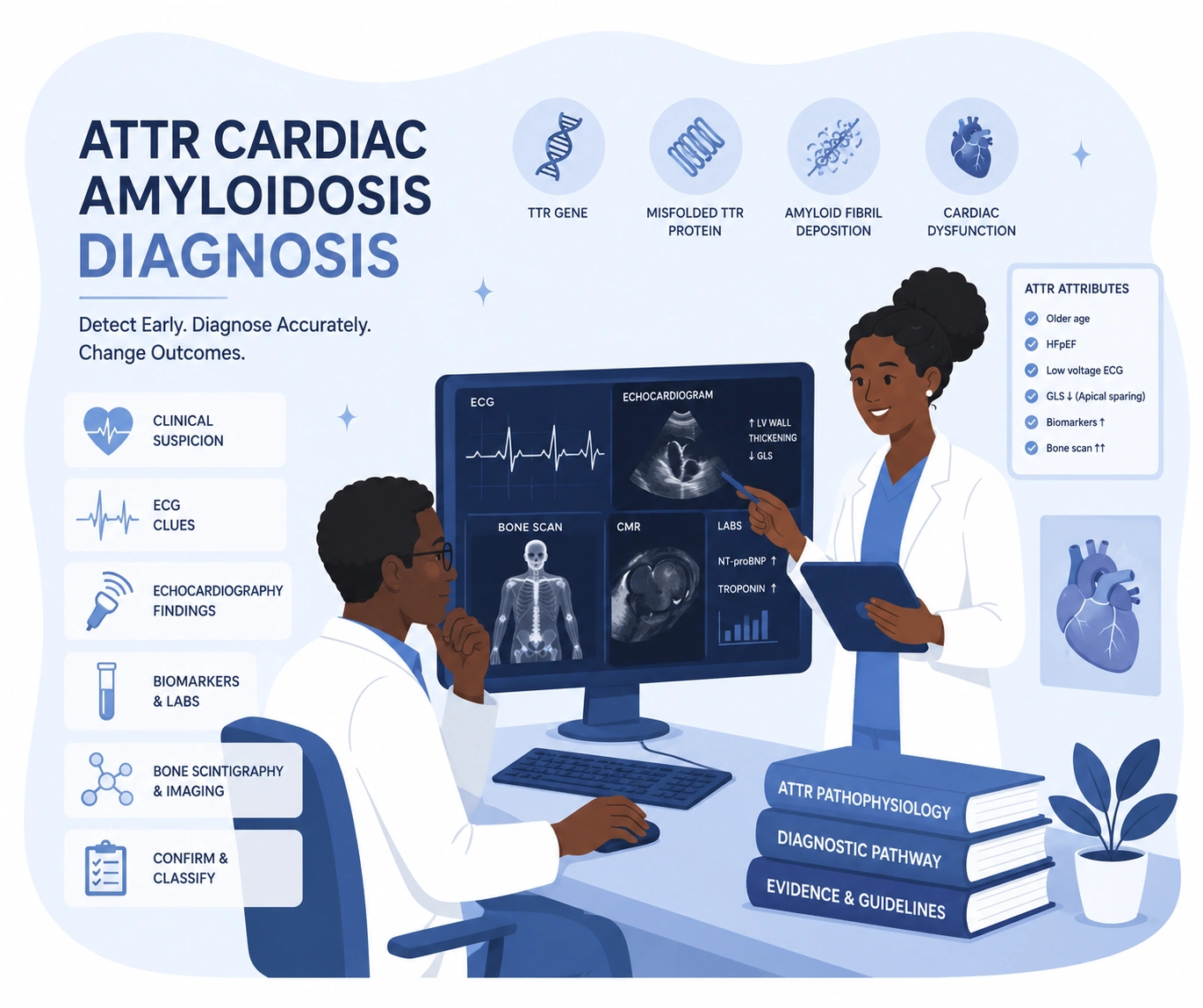
Delayed diagnosis of transthyretin cardiac amyloidosis (ATTR-CM) leads to irreversible cardiac damage and poor outcomes. This module introduces the foundational diagnostic approach endorsed by international cardiology societies and focuses on Step 1: Identifying red flags that warrant further investigation. Learners will explore demographic risk factors, extracardiac manifestations, and diagnostic patterns observable on ECG, echocardiography, and laboratory testing. Early identification is critical, especially in African populations, where hereditary forms may be more prevalent. Designed for frontline clinicians, this module bridges clinical intuition with structured diagnostic algorithms to accelerate diagnosis and improve outcomes in Kenya and similar settings.

Module 2: Confirming the Diagnosis: Step 2 – Monoclonal Protein Screening and Bone Scintigraphy in ATTR-CM
This module addresses Step 2 of the ATTR-CM diagnostic algorithm, where laboratory and imaging techniques merge to confirm disease subtype. Learners will first explore how to effectively perform monoclonal protein screening using serum/urine immunofixation and serum-free light chain assays. Emphasis is placed on the importance of excluding AL amyloidosis before proceeding with imaging due to its aggressive nature and distinct management. In the second half of the module, learners will dive into the use of technetium-labeled nuclear scintigraphy (e.g., 99mTc-PYP), understanding image interpretation via the Perugini grading system and H/CL ratio. Advanced techniques like SPECT, PET/CT, and 123I-mIBG are introduced, along with clear guidance on when biopsy remains necessary. Through clinical cases and structured interpretation tools, this module enables practitioners to navigate complex diagnostic decisions with clarity and confidence.

ATTR-CM Comprehensive Knowledge Assessment Quiz

About the instructor

CRK is Kenyan’s largest and most comprehensive provider of post-graduate training courses in clinical research, public health, pharmaceutical sciences, and various other domains. At CRK-CRO, we believe a properly trained and competent health workforce is essential to any successful healthcare system.

4.76 (255 ratings)

5 Courses

0 students

Free
Free access this course
Durations:
Lectures: 16
Students: Max 0
Level: Beginner
Language:
Certificate:

Want to receive push notifications for all major on-site activities?